Research Topic: Integrated Support Systems- school & therapy & vocational training
Research Topic: Integrated Support Systems- school & therapy & vocational training
Growing up is not just about personal choices; it is also shaped by the world around a young person, often long before they realize what influences them. Reading “The Other Wes Moore” made me reflect on how two boys with the same name, born just blocks apart, could end up with entirely different futures. It encouraged me to examine how factors like environment, trauma, education, family stability, and access to support systems shape a young person’s sense of possibility. Having witnessed the impact of emotional support, mentors, and stable structures in people's lives, this topic felt both important and personal. It reminded me that young people rarely choose the conditions they grow up in; they only choose how to survive those conditions. In this essay, I argue that, while individual and family choices influenced the other Wes Moore’s path, his life was shaped much more by street culture and systemic barriers that restricted his opportunities from childhood. Drawing on research about trauma, inequality, and adolescent development, as well as studies on integrated support systems, including school support, therapy, and vocational training, I will show that the other Wes’s failures resulted largely from an environment that offered survival rather than opportunity. For youth like Wes to thrive, communities must create coordinated systems that expand choices, stabilize families, and provide real pathways out of cycles of poverty and violence. Without such systems, young people cannot be expected to make better choices when the world around them offers so little.
From the start of the other Wes Moore’s life, structural forces shaped his daily reality and limited his options long before he could choose differently. He grew up in a neighborhood marked by concentrated poverty, segregation, and normalized violence- conditions created not by individual families but by political and economic systems. As the book explains, “The riots were fueled by illegal but strictly enforced racial segregation, economic contraction, and an unresponsive political system” (Moore 23). This context illustrates that Wes was born into a world already defined by inequality, where opportunities were scarce and survival took precedence. His environment was not just “dangerous”; it was the product of decades of disinvestment, redlining, and racially biased policing that shaped Black urban communities. Research adds weight to this by showing how systemic forces create instability: a 2024 national study found that youth who experience parental loss through violence or drug poisoning face serious educational and emotional consequences, with Black children disproportionately affected (Schlüter et al. 1743). Although Wes’s father did not die this way, his absence put Wes at similar risk, growing up with a fragile family structure, unsupported grief, and limited adult guidance. Mental health challenges also contributed. Over two-thirds of detained or at-risk youth have untreated mental health needs, yet “only 15% of youth with a significant mental health problem received treatment while detained” (Zajac, Sheidow, and Davis 7). The traumatic environment Wes grew up in, marked by racialized policing, failing schools, and a lack of emotional or structural support, created barriers that shaped his identity and possibilities before the concept of choice even started. When a child grows up in an unstable, violent, and neglected system, they are not just “choosing poorly”; they are making choices within a framework that does not support their growth.
As the systems surrounding Wes failed to provide a safe or stable environment, the support systems that should have protected him- family guidance, school engagement, and mental health services- were inconsistent or completely absent. From a young age, Wes lacked the adult supervision and emotional support needed to process stress, build resilience, and learn to regulate his behavior. His mother, Mary, loved her children deeply but felt overwhelmed by financial strain, inconsistent access to education, and the challenges of raising children alone. She tried to keep Wes safe, but she faced larger forces: rising tuition, job instability, and systemic racism that limited her economic mobility. When Wes was arrested for spraying graffiti as a young boy, “It was years before his mother found out her son had been arrested that day” (Moore 34). This incident highlights both emotional distance and a breakdown in communication between Wes and the institutions that were meant to inform his family. Research confirms that this fragmentation is common. A study of wraparound failures found that “families…could not identify or access the services they needed due to the complexity and fragmentation of systems” (Klayman and Crawford 6). Mary was one of those parents- loving, concerned, and trying her best, yet unable to navigate a system that should have helped her. Instead of receiving counseling, academic support, or mentoring, Wes was left to handle stress and confusion on his own. Schools failed to intervene effectively. Social services never reached out. Even community organizations did not connect with the family. When children lack adults to guide them in understanding consequences, managing emotions, or envisioning a future, they often turn to peers or environments that provide quick answers. In Wes’s case, the lack of support did not simply increase his vulnerability; it created a void quickly filled by street culture.
Another major barrier in Wes’s environment was aggressive policing and the criminalization of youth behavior, which influenced how he perceived himself and how institutions viewed him. Long before Wes made serious mistakes, he was treated as a suspect- watched, monitored, and punished without any real guidance or support. For many young boys in neighborhoods like his, police presence is not felt as protection but rather as an early introduction to systems of control. The book describes police cars constantly patrolling and watching young boys on corners as if expecting trouble. This constant surveillance sends a strong message: their bodies are linked to danger, and their very existence needs monitoring. Wes recalls being stopped and questioned by police even when he hadn’t done anything wrong. These early interactions teach children that authority is not on their side and that innocence offers no protection from suspicion. Experiences like these, common for Black boys in under-resourced neighborhoods, reinforce a belief that the system is something to evade, not something to rely on. Instead of creating safety, policing breeds fear, resentment, and a survival mindset that shapes Wes’s behavior and identity. Research supports this emotional impact: youth who have early encounters with police are more likely to disengage from school, feel alienated from authority, and adopt survival-based coping strategies. They often view these interactions as confirmation that society labels them as criminals, even before they understand crime or justice systems. For a child already dealing with poverty, family instability, and inconsistent school support, such experiences deepen the idea that the only reliable sources of protection are peers or street networks, not public institutions. Instead of feeling protected, Wes felt hunted, making him more likely to turn to those around him who offered immediate safety- even if those “protectors” came from the streets. This situation was not about poor choices; it was about a system that labeled him as a criminal before he understood what crime meant. In this environment, policing did not prevent crime- it normalized the notion that Wes belonged on society’s margins, far from opportunities and the belief that adults in authority wanted him to succeed.
As the gaps in Wes’s support systems widened, street culture stepped in to provide what traditional institutions failed to offer: belonging, identity, protection, and a sense of purpose. By the time Wes reached his teenage years, the corner had become not just a physical place but a social world with its own rules, values, and rewards. The book illustrates this early on: “The drug game was everywhere, with a gun handle protruding from the top of every tenth teenager’s waistline” (Moore 27). Growing up in such an environment made drug dealing or carrying a weapon feel normal, not extraordinary. It also appeared economically rational in a world where legitimate jobs were few and poorly paying. Street culture provided an identity that felt accessible and respected. Even more influential was Tony, the older brother figure Wes admired and feared. “To Wes, Tony was a ‘certified gangsta’” (Moore 27), embodying the toughness and respect the streets seemed to demand. Tony served as both a warning and an inspiration- someone who advised Wes against his path but simultaneously represented the only consistent male role model in Wes’s life. Research clarifies this phenomenon: youth without supportive environments often seek identity and belonging in peer groups that normalize risk. Adolescents in delinquent peer networks are vulnerable to “deviance training,” where peers promote and reinforce antisocial behaviors (Cumming et al. 14). For Wes, being tough signified safety, and making money represented survival. Street culture filled the emotional and social voids left by absent support systems, offering Wes quick money, status, and a sense of competence he had never experienced in school or family. What appeared as “bad choices” to outsiders were, for Wes, survival strategies shaped by the surrounding cultural, emotional, and economic forces.
Another force shaping Wes’s identity was the intense pressure to perform masculinity in a setting where vulnerability could be dangerous. In his neighborhood, showing fear, sadness, or uncertainty was seen as a weakness that could be exploited. Expressing emotions was frowned upon, while aggression, dominance, and fearlessness were praised as survival traits. The author Wes explains that boys in his neighborhood learned early that “crying was something you did alone, if at all” (Moore 18). This message was more than cultural advice; it was a rule for survival in an environment where softness could make one a target. The other Wes absorbed these lessons even more deeply. With no father consistently present and Tony modeling a tough, uncompromising identity, Wes learned that being bold, tough, and unemotional was mandatory, not optional. Tony warned Wes to avoid the streets, but his own actions contradicted his advice, teaching Wes that masculinity meant embracing risk and projecting strength, even if it led to destructive paths. Research on boys in high-poverty neighborhoods supports this dynamic. Studies show that boys in unstable environments often develop “hypermasculine performances” as a response to violence, insecurity, and a lack of emotional support from adults (Killen, Elenbaas, and Ruck 337). When boys lack access to therapy, safe spaces, or nurturing guidance, they learn to replace vulnerability with toughness and community belonging with peer validation. This was especially true for the other Wes, who never had emotionally healthy male figures to mentor him. Without therapy or male role models who could show him that true strength includes emotional regulation, Wes’s identity became constrained by a narrow and harmful version of manhood- one defined by control, physical presence, and the ability to endure pain without complaint. This was not a personal failing; it was a cultural survival strategy shaped by systemic conditions. His sense of masculinity turned into a shield against fear and instability, yet it also obstructed his emotional growth, communication skills, and future orientation. Masculinity became both his armor and his trap.
In contrast to the other Wes, the author Wes Moore found support systems during crucial moments that changed his sense of self, emotional growth, and future. These supports did not remove his challenges- he grew up in the Bronx during violent times and a decline in public schools- but they provided structure, expectations, and mentorship at key moments. One of the most significant moments was his mother sending him to Valley Forge Military Academy after he started engaging in risky behavior. Although he resisted at first, military school eventually gave him a sense of belonging and accountability. As he later mentioned, “For the first time, I felt part of something that expected greatness from me” (Moore 88). The emotional support from adults and peers who believed in his potential gave him a sense of stability that the other Wes never experienced. School-based wraparound programs reflect this structure. Research shows that these systems are important: integrated supports “address the needs of the whole student… promoting mental and physical health and academic success” (Cumming et al. 14). At military school, the author Wes not only built discipline but also met role models- mentors, sergeants, teachers- who encouraged him to see himself differently. His outlook on the future improved because he was surrounded by people who believed that he had one. The contrast between the two boys highlights that thriving is not just about motivation. It depends on whether the systems around a young person create paths toward possibility or force them into survival mode.
While the author Wes received structure and mentorship that changed his life, the other Wes grew older without consistent emotional guidance, school support, or therapy. The instability in his home, his mother’s financial and emotional stress, and the lack of organized support meant he learned to handle stress through avoidance, impulsivity, and pursuing short-term rewards. His early experiences, like being arrested without his mother’s knowledge, set a pattern where consequences were hidden, adults were unreliable, and he dealt with problems on his own. This isolation shaped his view of responsibility: not making better choices but quietly managing his issues without asking for help. As he aged, these coping methods became identity markers shaped by the streets: toughness, defiance, and a belief that he had limited control over his life. Research on at-risk youth backs up this pattern. The Community Kids Wraparound study found that, before integrated supports were introduced, families “could not identify or access the services they needed due to the complexity and fragmentation of systems” (Klayman and Crawford 6). Wes was not avoiding help- he lived in a world where meaningful support did not exist. Without therapy, mentoring, or school intervention, his ability to manage emotions never developed in healthy ways, making decision-making under pressure even harder. Instead of seeing himself in new roles like a student, apprentice, or leader, Wes accepted the limited options around him. The lack of support systems not only influenced his choices but also restricted the futures he could envision, making the street life feel unavoidable.
The differences between the two Weses become most apparent when we look at how each responded to similar pressures. Both boys lived in unstable neighborhoods, were exposed to violence, and faced moments that could have pushed them further into danger. However, while the author Wes engaged with adults and institutions that stepped in at crucial times, the other Wes had to manage crises on his own. For the author Wes, military school became a support system, providing structure, mentors, and a community dedicated to his success. He describes how the academy encouraged him to see beyond his immediate surroundings: “People kept pushing me to see more in myself than what was directly in front of me” (Moore 94). This consistent encouragement helped him develop discipline and future-focused thinking. In contrast, the other Wes seldom received help from schools, social services, or community programs. He briefly found hope through Job Corps, where he earned his GED, discovered a passion for hands-on work, and even imagined a stable life for his children. But without solid family support or guidance after the program, he fell back into the same pressures and temptations that had shaped his life for so long. Research on wraparound social services explains this outcome: the most effective interventions require continuous cooperation among families, schools, and community supports to maintain progress over time (McCarter 3). Wes needed a coordinated system that followed him beyond a single program, helping him transition into work, develop coping skills, and stay connected to mentors. The author Wes had that kind of support system. The other Wes never did. Their different paths show that outcomes relate less to inherent differences between the two boys and more to which one had systems designed to help him succeed.
If the other Wes had access to an integrated support system early in his life- one combining school engagement, therapy, and vocational training- his path might have been very different. Many of the moments that led him toward the streets were not signs of laziness or unwillingness to change; they were signs of a boy trying to survive without guidance. Research indicates that coordinated interventions can significantly improve outcomes. For instance, the JOBS program provides “developmentally tailored wraparound services focused on career development… improving school and employment engagement from 23% to 96%” (Zajac et al. 12). Programs like this would have offered Wes job skills, mentors, emotional support, and direction- real alternatives to the fast money and identity of the drug economy. Vocational rehabilitation models like the Discovery process also show that teens flourish when adults help identify their talents and connect them to real job opportunities instead of comparing them to strict academic standards (Smith, Dillahunt-Aspillaga, and Kenney 203). Wes was smart, resourceful, and capable, but no one helped him focus those abilities. Even school programs utilizing therapy, such as the PIA-2 model, enhance emotional regulation and reduce risky behavior by giving adolescents the tools to handle stress in healthier ways. Had Wes been surrounded by a system linking his school, home, and community supports, he could have built coping skills, envisioned different futures, and seen himself as capable of more than just life on the corner. His story suggests it wasn't his lack of potential that held him back but rather the absence of opportunity, structure, and lasting support. Integrated support systems work because they do not expect adolescents to navigate challenges alone. They provide the stability and guidance that street culture falsely claims to offer but never truly delivers.
The story of the two Wes Moores shows that thriving is never just the result of personal effort; it relies on the systems around a young person and the choices those systems make possible. The other Wes did not fail because he lacked intelligence, drive, or potential; he lacked support, guidance, and the chance to pursue better options. Poverty, trauma, and neglect narrowed his choices long before he understood he had any. The institutions meant to protect and guide him- schools, social services, mental health networks, and policing systems- either ignored him or interacted with him only to punish rather than support. Meanwhile, the author Wes benefited from a very different set of influences: structure, mentors, educational opportunities, and adults who consistently encouraged him to dream beyond his immediate surroundings. His journey illustrates how even one strong intervention- like a caring school, an involved mentor, or a disciplined program- can open doors that once felt impossible. Their differing lives reveal a hard truth: choice is not equal when survival conditions limit imagination, safety, and stability. Some children consider colleges; others decide between the corner and hunger. For young people to succeed, communities, schools, and families must join forces to create integrated support systems that tackle academic needs, mental health, and job development. Adolescents require more than just encouragement- they need tangible structures that make success feel achievable. They deserve safe schools where teachers notice when they go missing, mental health programs that address trauma early instead of punishing it, vocational programs that instill confidence and hope, and community systems that connect instead of leaving families to handle crises alone. Thriving takes more than “trying harder”; it needs environments that foster growth. Without coordinated support, young people learn to cope with trauma in isolation, relying on short-term survival strategies that often lead to long-term consequences. If systems provided integrated support instead of expecting resilience without resources, many youths like the other Wes could build new futures based on stability and purpose. Their stories remind us that talent exists everywhere, but opportunities do not. And those opportunities are shaped by the structures we choose to build or change. The two Wes Moores illustrate the potential outcomes when support systems step in at the right moment and what happens when they do not. Their parallel lives urge us to rethink what society owes its young people and to ensure that future generations grow up in surroundings where they can thrive, not just survive.
My Process After Peer Review
After the peer review by Renata Pascoe, I heavily revised my draft to meet the expectations for an analytical research paper. My greatest effort was in changing the tone of my paper from personal to objective. Specifically, based on the feedback, I avoided first-person phrases such as "Reading made me reflect" and "I argue," and replaced them with authoritative statements like "This essay contends". This way, instead of focusing on my reaction, I was able to place the focus on the evidence itself. Based on the reviewer's comment regarding the "loose thread" in my introduction- a sentence about "having witnessed" support systems--I removed it because it was not developed later in the text. In addition, I corrected a major omission by adding The Other Wes Moore to my Works Cited list since it is the main subject of the analysis. Finally, I reformatted the visual appearance of my essay to strictly conform to MLA guidelines, ensuring that all paragraphs were indented instead of in block format like my rough draft.
Research Topic: Integrated Support Systems- school & therapy & vocational training
Growing up is influenced not by personal choices; it is equally molded by the environment around a youth frequently beyond their conscious perception. Wes Moore’s memoir "The Other Wes Moore" recounts the lives of two boys both named Wes Moore born just a few blocks from each other whose paths split significantly. Their stories demonstrate how factors such as environment, challenges, education, family steadiness and availability of support shape an individual’s outlook on potential. The story emphasizes that young individuals seldom select the conditions of their upbringing; rather they decide how to deal with those conditions. This essay contends that while personal and familial choices affected Wes’s path his life was largely shaped by street culture and systemic obstacles that limited his opportunities from early on. Based on research concerning trauma, inequality and adolescent growth along with examinations of support networks including school programs, counseling and vocational training this analysis reveals that the challenges faced by the Wes primarily stemmed from an environment focused on survival rather than opportunity. For young people, like Wes, to succeed communities need to develop structures that expand choices, reinforce families and establish pathways out of poverty and violence. In the absence of these frameworks it is unreasonable to anticipate that young individuals will make decisions when their surroundings provide minimal assistance.
“The Other Wes Moore” weaves together the linked stories of two boys both named Wes Moore- one who achieves status as a Rhodes Scholar, military officer and author and the other who is imprisoned for life due to his involvement in a robbery that resulted in murder. This memoir alternates between the Bronx and Baltimore, during the 1980s and 1990s illustrating how their families, communities and social systems react to poverty and violence. In alternating chapters Moore shows how schooling discipline, law enforcement, job opportunities and guidance influence each Wes’s choices and identity. Ultimately it becomes evident that the "other Wes" didn’t just choose poorly; he was raised in conditions lacking support networks, where street culture frequently acted as the sole reliable structure. This context prompts an inquiry: how could enhanced coordinated support have changed his path?
From the outset of the other Wes Moore’s life systemic factors shaped his everyday experiences and restricted his options well before he had any personal say. He grew up in a community defined by poverty, racial segregation and frequent violence- circumstances created not by individual households but by political and economic frameworks. In Moore’s depiction of Baltimore’s turmoil "The riots were fueled by enforced racial segregation, economic contraction and an unresponsive political system" (Moore 23). Wes entered a world already marked by disparity, where chances were scarce and staying alive was the priority. His environment reflected decades of neglect, discriminatory lending practices that restricted families from equitable housing and credit and racially prejudiced policing, in Black city areas.
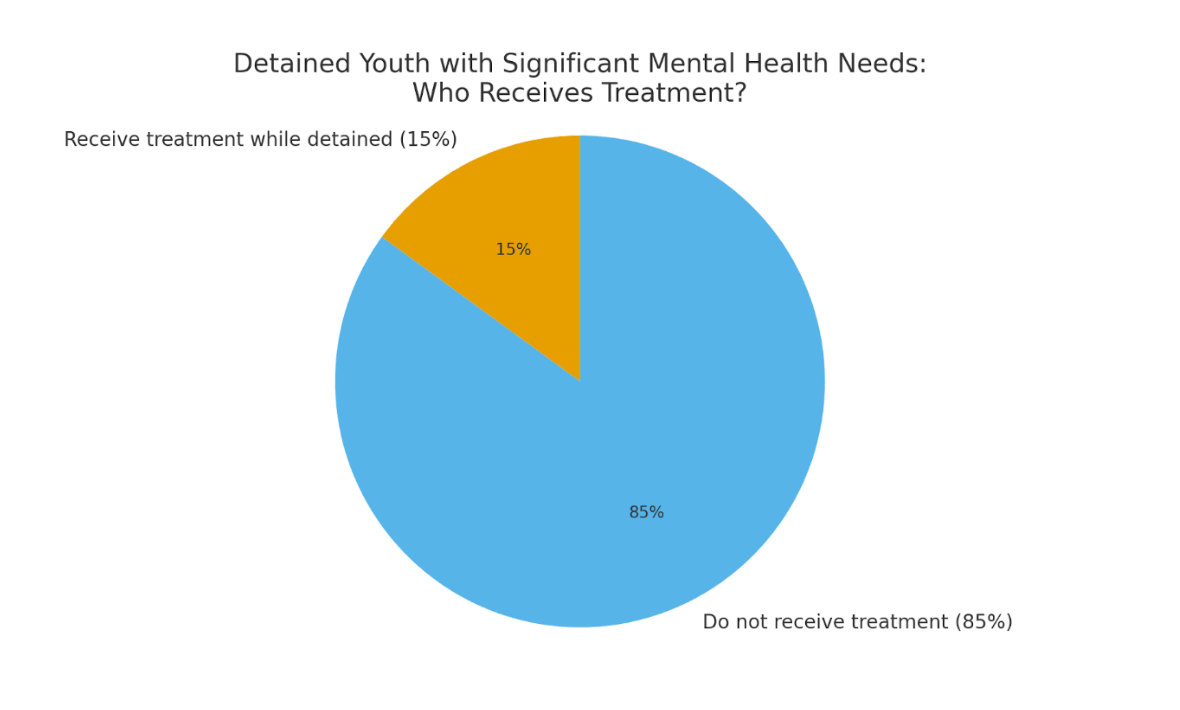
Evidence backs this depiction. A 2024 nationwide investigation revealed that young people who undergo loss due to violence or drug overdose encounter significant academic and emotional difficulties with Black children being disproportionately impacted (Schlüter et al. 1743). While Wes’s father did not pass away under these circumstances his absence resulted in Wes having a family environment, unresolved mourning and insufficient adult support. Mental health struggles also played a role. Over two-thirds of youth who are detained or considered at risk experience mental health issues yet "only 15% of youth, with a significant mental health problem received treatment while detained" (Zajac et al. 7). In terms roughly 85% do not get any treatment at the time they are most exposed to institutional systems. Wes was raised in a setting characterized by law enforcement, underfunded education and an absence of emotional or systemic backing- obstacles that influenced his identity and chances long before he grasped the concept of "choice." A youngster brought up in such a deprived environment is not merely making "choices”; they are deciding within a framework that does not support their growth.
With the systems surrounding Wes unable to offer stability the support frameworks intended to protect him- family guidance, school engagement and mental health services- were either inconsistent or missing. Throughout his childhood Wes was deprived of the adult supervision and emotional support essential for managing stress, developing resilience and acquiring self-discipline. His mother, Mary cared deeply for her children yet faced struggles, limited schooling options and the hardships of raising children alone. She endeavored to safeguard Wes but encountered increasing tuition fees, precarious jobs and institutional racism that hindered her advancement. Moore describes how Mary’s effort to complete her college education failed after the Pell Grant support was withdrawn, shutting down an opportunity that could have brought stability to the family (Moore 27–28). When Wes was apprehended for graffiti as a youngster "It was years before his mother found out her son had been arrested that day" (Moore 34) exposing both detachment and a failure in communication, between the household and authorities.
Studies show that this type of fragmentation is common. Research on wraparound services revealed that "families…could not identify or access the services they required due to the fragmented systems" (Klayman and Crawford 6). Mary was, among those parents- compassionate, yet unable to manage a bewildering system. Then getting counseling, educational assistance or mentoring Wes faced stress and doubt on his own. Educational institutions did not step in appropriately; social services were unable to establish a connection with the family; community organizations failed to deliver long-term assistance. When youths lack adults to guide them in grasping consequences, managing feelings or envisioning a future they frequently seek out peers or settings providing solutions even if those solutions are damaging. For Wes the lack of support not heightened his risk but also created a void that street culture rapidly occupied.
A significant obstacle in Wes’s environment was the policing and labeling of young people’s actions as criminal, influencing both his self-image and the perception institutions had of him. Prior to Wes engaging in major crimes he was viewed as a suspect- monitored, questioned and penalized without genuine support. For youths in communities like his the police are often seen not as protectors but as a confrontation, with mechanisms of control. Moore depicts police vehicles perpetually patrolling and observing boys on street corners as though they were troublemakers. This ongoing observation conveys a signal: their bodies are linked to threat and their existence has to be watched. Wes remembers being halted and interrogated by law enforcement despite having done nothing realizing that those in power were not allies and that being innocent provided no safeguard.
These encounters, frequently experienced by boys in under-resourced neighborhoods convey to young people that the system is to be avoided rather than relied upon. Then fostering security policing often generates fear, bitterness and a mindset focused on survival. Research indicates that initial interactions with law enforcement increase the chances that youth will withdraw from school, become distrustful of authority and develop coping methods based on survival. They perceive these interactions as evidence that society already views them as offenders. For a child who is already dealing with poverty, family conflicts and irregular access to education, these circumstances strengthen the notion that genuine safety is found among friends or street circles, rather than formal institutions. Wes did not experience a sense of safety; he felt pursued and thus depended on those who provided protection even if those "protectors" belonged to the streets. This scenario was not the result of poor decisions. It emerged from a system that branded him a criminal before he ever grasped the concept of crime driving him toward exclusion rather than access to opportunity.
When Wes’s support systems broke down street culture stepped in to provide connection, identity, security and meaning. By the time he reached adolescence the corner had transformed from a physical spot into a social environment governed by its own norms and incentives. Moore observes, "The drug game was everywhere, with a gun handle protruding from the top of every teenager’s waistline" (Moore 27). Within this setting selling drugs or possessing a weapon seemed typical and financially sensible particularly when lawful employment opportunities were limited and poorly compensated. The street lifestyle provided Wes with a sense of identity that commanded respect in ways that school and employment never achieved.
Tony, his elder half-brother, strengthened this influence. "To Wes Tony was a ‘ gangsta’" (Moore 27) representing the grit and prestige felt essential for survival. Tony cautioned Wes about the drug world. Simultaneously exemplified it thus serving as the sole consistent male figure in his life. Studies reveal this trend: young individuals deprived of surroundings frequently seek bonds, within peer circles that embrace risky behaviors. Teenagers involved in peer groups are susceptible to "deviance training " a process where friends promote and reinforce antisocial conduct (Cumming et al. 14). For Wes being tough equated to security and earning money equated to staying alive. The street world compensated for the absence of support structures providing cash, acknowledgment and a sense of capability he never found in school or at home. Behaviors that seem to outsiders as poor choices" were, to Wes tactics, for survival molded by strong cultural and economic influences.
Masculinity was also a factor in forming Wes’s sense of self. In his community displaying fear, sadness or uncertainty was viewed as a vulnerability that could be taken advantage of by others. Showing feelings was frowned upon whereas aggression and bravery were admired. The author Wes remembers that boys were taught from an age that "crying was something you did alone if at all" (Moore 18). This was beyond guidance; it was an unspoken command for survival, in an environment where weakness could invite harm. The other Wes absorbed these teachings profoundly. Lacking a father figure and faced with Tony’s stern unyielding model he concluded that being fearless, resilient and emotionally distant was essential.
Investigations into boys living in high-poverty areas validate this trend. Research indicates they frequently exhibit "traits as a reaction to violence, unpredictability and the absence of emotional guidance from adults (Killen, Elenbaas and Ruck 337). Lacking counseling, secure environments or encouraging mentors, boys replace openness with toughness. Seek peer approval instead of authentic community bonds. This was particularly evident in the Wes, who lacked emotionally stable male role models to look up to. Without therapy or guides to demonstrate that genuine strength involves managing emotions his concept of manhood contracted into a narrative centered on control, physical power and stoic persistence. This identity was not a defect; rather it was a coping strategy molded by his circumstances. However it also hindered his development, communication abilities and capacity to envision the future. Masculinity served as both his protection and his prison.
Conversely the writer Wes Moore experienced support systems at pivotal times that transformed his sense of self, feelings and prospects. These aids did not eliminate his challenges- he was raised in the Bronx amid times and went to deteriorating public schools- but they provided him with discipline, hopes and guidance precisely when he needed them most. A significant shift occurred when his mother enrolled him in Valley Forge Military Academy after he started failing his courses and encountering problems. Initially he resisted. Military school slowly instilled in him a feeling of connection and responsibility. Looking back he states, "For the time I felt part of something that expected greatness from me" (Moore 88). The adults and classmates at the academy trusted his potential, providing him with a steadiness that the other Wes never knew.
Studies on school-based wraparound initiatives endorse the effectiveness of these frameworks. Coordinated services "address the needs of the student… fostering mental and physical well-being as well, as academic achievement" (Cumming et al. 14). At Valley Forge, Wes the author developed self-discipline. Encountered mentors- sergeants and educators- who assisted him in viewing himself in a new light. He assumed leadership positions, started considering college and understood how temporary sacrifices relate to aspirations. His focus on the future intensified as he was among individuals who anticipated he would have one. The contrast between the two boys illustrates that thriving demands more than drive; it relies on whether the environments around them build routes to opportunity or confine young people to mere survival.
Although the author Wes obtained guidance and support that changed his life the other Wes was raised without emotional backing, academic assistance or counseling. Home instability, his mother’s difficulties and the absence of structured help caused him to handle issues by evading them, acting impulsively and seeking immediate gratification. Initial experiences- , like being arrested without his mother’s awareness- showed him that adults were untrustworthy and that consequences were frequently concealed. He became accustomed to handling crises by himself. This solitude molded his feeling of duty: not improving decision-making but silently handling difficulties without seeking assistance.
As he matured these survival tactics solidified into a persona shaped by street culture: resilience, rebellion and a conviction that he had actual influence over his situation. Studies on youth exhibit this trend. The Community Kids Wraparound project discovered that prior to the implementation of coordinated assistance families "were unable to locate or obtain the services they required because of the disjointed nature of the systems" (Klayman and Crawford 6). Wes was wasn’t rejecting assistance; he existed in an environment where genuine support was almost nonexistent. Lacking therapy, guidance or educational aid he failed to learn emotional coping strategies, which complicated making choices during stressful moments. Then identifying as a learner, trainee or leader he settled for the limited possibilities available to him. The absence of support networks affected both his decisions and the potential futures he envisioned rendering a life on the streets seemingly unavoidable.
The difference between the two Wesleys is most evident when examining their reactions to challenges. Each was raised in areas, experienced violence and confronted situations that might have dragged them further into trouble. However the author Wes was supported by adults and organizations during periods whereas the other Wes dealt with emergencies on his own. For the author Wes military school served as an encompassing support network providing structure, mentorship and a community committed to his achievement. He remembers, "People continuously urged me to see beyond what was visible" (Moore 94). That steady support aided him in cultivating discipline and a looking perspective.
In contrast the other Wes seldom got assistance from educational institutions, social services or local initiatives. Job Corps offered him a lived sense of hope: he obtained his GED, found satisfaction in practical work and envisioned a secure future for his children. However, lacking family backing or direction following the program he fell back, into the familiar challenges and enticements. Research on wraparound services clarifies this trend: the most successful approaches demand continuous collaboration between families, schools and community resources to sustain improvement (McCarter 3). Wes required an integrated support system that would accompany him beyond one program assisting him in moving into employment developing resilience skills and remaining connected to mentors. The author Wes possessed such a system. The other Wes lacked it. Their different trajectories reveal that results rely less on the boy's innate distinctions and more on which one received networks aimed at ensuring his success.
Had the other Wes received support early on- blending school involvement, therapy and career preparation- his life path might have changed significantly. Numerous instances that pushed him toward street life were not indications of unwillingness or defiance; they revealed a child struggling to survive without direction. Studies indicate that organized interventions can significantly enhance results. The JOBS initiative for instance provides " tailored wraparound services centered on career growth… boosting school and employment participation from 23% to 96%" (Zajac et al. 12). Such programs might have provided Wes with job training, mentors, emotional backing and guidance- alternatives to the quick cash and identity linked to the drug trade.
Vocational rehabilitation models like the Discovery process demonstrate that teenagers thrive when adults assist in recognizing their strengths and link them to employment opportunities rather than assessing them solely on academic achievement (Smith, Dillahunt-Aspillaga and Kenney 203). Wes possessed intelligence and resourcefulness. No one guided him in utilizing those talents effectively. School-centered initiatives incorporating therapy, such as the PIA-2 model enhance control and decrease hazardous behavior by equipping young people with skills to manage stress in healthier ways. Had Wes been enveloped by a network linking his school, home and community resources he might have developed coping mechanisms, envisioned futures and viewed himself as capable beyond life, on the street corner. His experience indicates that what limited him was not an absence of potential but a shortage of opportunities, structure and enduring support. Integrated systems are effective because they do not anticipate that teenagers confront daunting obstacles, they offer the stability and guidance that street culture claims but fails to provide.
The story of the two Wes Moores illustrates that achievement is never the outcome of personal effort; it relies on the environments around young individuals and the opportunities those environments offer. The other Wes did not fall short due to a lack of intelligence, drive or capability. He was missing support, direction and genuine opportunities to follow routes. Poverty, hardship and neglect limited his choices well before he understood he had any options. Organizations intended to safeguard and assist him- schools, social services, mental health agencies and law enforcement- . Ignored him or engaged with him primarily to discipline. Conversely the author Wes was raised under circumstances: organized programs, mentors, educational chances and adults who regularly encouraged him to envision a wider future. His experience illustrates how one impactful intervention- a nurturing school, a committed mentor or a structured program- can unlock opportunities that previously appeared out of reach.
Their varied backgrounds uncover a reality: choices are not equivalent when circumstances for survival restrict creativity, security and steadiness. Some young individuals can concentrate on college applications; others face the choice between hunger and the streets. For adolescents to thrive communities, schools and families must work together to create support networks that tackle educational needs, mental well-being and career growth. Teens need more than encouragement; they require solid frameworks that make success appear attainable. They merit institutions where instructors recognize when they are absent mental health initiatives that tackle trauma promptly rather than penalizing it vocational training that fosters self-assurance and optimism and community organizations that link families rather than abandoning them in times of need. Thriving calls for more than mere "putting in effort”; it necessitates settings that encourage development. Assistance young people are forced to handle trauma alone depending on temporary coping methods that frequently result in enduring damage. If systems offered integrated assistance instead of expecting resilience without resources, many young people like the other Wes could build new futures based on stability and purpose. Their stories remind us that talent is widespread, but opportunity is not. The outcomes of the two Wes Moores show what happens when support networks step in at the right moment- and what happens when they never arrive- challenging communities and institutions to build environments where all young people can truly thrive.
Reflection on Professor's Comments
Reflecting on the comments, it hit me that I set up the historical context without completing the circle back to the subject. I rewrote the text in an effort to ease the awkward syntax at the end of the paragraph, but more importantly, to offer a deeper level of analysis. I made sure housing and policing wasn't a background noise, but clearly identified the active force that limited Wes's choices and shaped his worldview.
Research Topic: Integrated Support Systems- school & therapy & vocational training
Growth isn’t solely modeled by personal choices alone; rather, it is equally modeled by the environment-pressing forces which often influence young people without their knowing. Wes Moore’s memoir “The Other Wes Moore, One Name, Two Fates” tells the tales of two boys both named Wes Moore born just a few blocks from each other whose lives branched off in very different directions. Through their stories, it can be shown that such factors as environment, challenges, education, stability of family, and the availability of support mold an individual’s view about possibilities. It is important to note that youngsters seldom choose the conditions of their childhood; they choose only how to survive under those conditions. This essay argues that though personal and family decisions did play a role in Wes’s life, his life was largely molded by the culture of the streets and systemic barriers that kept him from having real options in life from early on. Based on research concerning trauma, inequality and youth development, in conjunction with studies of support systems, including school programs, counseling, and vocational training , this analysis identifies that the circumstances going against Wes were perpetuated by an environment centered around survival and not one centered around possibility. In order for kids like Wes to thrive, communities must build systems that widen options, strengthen families, and create routes out of poverty and violence. Without these frameworks , it becomes unfair to expect youths to make good choices where their environs provide little assistance.
“The Other Wes Moore, One Name, Two Fates” together the interconnected tales of two boys both named Wes Moore- one who achieves status as a Rhodes Scholar, military officer and author and the other who is serving life in prison due to his involvement in a robbery that ended in murder. The sociopolitical landscape of the Bronx and Baltimore in the 1980s and 90s provides more than a backdrop; it's a decisive force which ordered the possible choices for both boys. Moore uses these interweaving narratives to slice apart how particular community structures- from school discipline to law enforcement- intervene differently in each life. When framed this way, the path of the "other Wes" begins to not look so much like a failure of character as a failure of the safety net. That raises a crucial question: to what extent might an integrated, coordinated support system have disrupted his trajectory toward incarceration?
Systemic factors shaped the other Wes Moore’s everyday experiences and restricted his options well before he had any personal say from the very start of his life. He grew up in a community defined by poverty, racial segregation, and frequent violence- circumstances created not by individual households but by political and economic frameworks thrive in such communities. To give an image of the turmoil in Baltimore, for example, Moore talks about unrest following the assassination of Martin Luther King Jr. and says: “The riots were fueled by enforced racial segregation, economic contraction and an unresponsive political system” (Moore 23). This means that since birth, Wes came into a world that was largely sculpted by disparity, where inequality. Chances are slim; survival is number one. Especially, his community was especially representative of an abandonment that had been going on for several decades in Black urban areas-as demonstrated through racist lending practices that made it hard to acquire equal housing and credit , as well as racially biased law enforcement practices. For Wes, these are not ideals , but realities that degraded his support structure from the beginning.
Evidence supports this. portrait. A 2024 national study found that young people who experience loss due to violence or drug overdose face significant academic and emotional challenges with Black children being disproportionately affected (Schlüter et al. 1743). Although Wes’s father did not die under these circumstances , his absence resulted in Wes having a familial situation, unresolved grief and inadequate adult support. Mental health issues also contributed. More than two-thirds of youth detained or at risk have mental health problems yet "only 15% of youth, with a significant mental health problem received treatment while detained" (Zajac et al. 7). In terms roughly 85% receive no treatment at all at the point they are most vulnerable to institutional systems. Wes grew up in a setting defined by policing, under resourced education and an absence of emotional or institutional support- barriers that shaped his identity and opportunities long before he knew what "choice" meant. A child growing up in such a deprived environment is not merely making " choices”; they are choosing within a system that does not support their growth. nurture them.
With the systems surrounding Wes unable to provide stability the support structures designed to safeguard him- family guidance, school engagement and mental health services- were either sporadic or. absent. Throughout his childhood Wes was deprived of the adult supervision and emotional nurturing necessary for coping with pressure, building resilience and acquiring self-control. His mother , Mary loved her children but battled challenges, limited educational opportunities and the difficulties of raising children alone. She did her best to protect Wes but found herself confronted by rising tuition costs, insecure employment and institutional racism that hindered her advancement. Moore recounts how Mary’s effort to complete her college education was defeated when the Pell Grant funding was withdrawn, closing off an opportunity that might have brought security to the family (Moore 27–28). When Wes was arrested for graffiti as a child "It was years before his mother found out her son had been arrested that day" (Moore 34) revealing both neglect and a breakdown in communication between the home and authorities.
Studies indicate that this level of fragmentation is typical. Research regarding wraparound services discovered that "families…could not identify or access the services they needed because the systems were fragmented" (Klayman and Crawford 6). Mary was, among those parents- compassionate, yet unable to navigate a bewildering system. Then getting counseling, educational support or mentoring Wes experienced stress and uncertainty on his own. Educational institutions did not intervene appropriately; social services could not reach out to the family; community organizations could not provide long-term support. When young people do not have adults to help them understand consequences, handle emotions or envision a future, they frequently turn to peers or environments that offer solutions even if those solutions are damaging. For Wes the absence of support not only increased his vulnerability but also left a void that street culture quickly filled.
A powerful barrier in Wes’s environment was the policing and labeling of youths' behavior as criminal, which affected both his self-image and the way institutions perceived him. Prior to Wes commiting major crimes he was viewed as a suspect- monitored, questioned and penalized without being truly provided with care. For boys in communities like his the police are not presented as protectors but rather as a challenge, one where there are mechanisms of discipline and control. Moore illustrates that police vehicles constantly drive by and monitor boys standing on street corners as though they were troublemakers. This constant monitoring sends a signal: their bodies are associated with danger, and their lives must be monitored. Wes reflects on how he used to be stopped and questioned by the police when he had done nothing wrong, learning that the people in power were not friends, and being innocent was no protection.
These experiences, all too common in under-resourced neighborhoods, communicate to young people that the system is something to be avoided, not counted on. Then security policing often creates fear, resentment and a way of being that is preoccupied with survival. Research indicates that first contact with police increases the likelihood that a young person will disengage from school, become mistrustful of all forms of authority and acquire coping strategies rooted in survival. They feel these interactions as confirmation that the world has already judged them as criminals. For a child already dealing with poverty, family strife and inconsistent access to education, these experiences deepen the conviction that safety can only truly be found among friends or street networks, rather than within formal structures. Wes was not offered safety; he was hunted and so he needed those who could offer protection even when those "protectors" were of the streets. In such instances, this is not a matter of poor choices. It's the product of a system that branded him a criminal well before he knew what crime was, which moved him toward marginalization rather than toward opportunity.
When Wes’s support systems failed, street culture filled the gap to offer connection, identity, security and purpose. By the time he reached adolescence the corner had become more than a physical location but a social space ruled by its own set of rules and rewards. Moore relates, "The drug game was everywhere, with a gun handle protruding from the top of every teenager’s waistline" (Moore 27). In this context dealing drugs or carrying a gun was normal and made economic sense given the relative absence of legitimate job opportunities and decent wages. Being on the streets gave Wes an identity that earned respect that school and work never did.
Tony, his older half-brother, reinforced this impact. "To Wes Tony was a ‘ gangsta’" (Moore 27) exemplifying the hardness and respect thought necessary to survive. Tony warned Wes about the drug world. Meanwhile modeled it as he became the only steady male presence in his life. Researchers document this pattern: adolescents bereft of their environments seek connection, among peer networks that promote dangerous activities. Youth entangled in peer networks are vulnerable to "deviance training " a dynamic in which friends encourage and reinforce anti-social behavior (Cumming et al. 14). For Wes being hard equaled safety and making money equaled surviving. The street world replaced missing support systems offering money, recognition and a sense of competence he never experienced in school or at home. Actions, that to outsiders appear as "poor decisions" were, to Wes strategies, for survival forged in robust cultural and economic contexts.
Investigations into boys living in high-poverty areas validate this trend. Research indicates they frequently exhibit "traits as a reaction to violence, unpredictability and the absence of emotional guidance from adults" Killen, Elenbaas and Ruck 337. Lacking counseling, secure environments or encouraging mentors, boys replace openness with toughness. Seek peer approval instead of authentic community bonds. This was particularly evident in the Wes, who lacked emotionally stable male role models to look up to. Without therapy or guides to demonstrate that genuine strength involves managing emotions his concept of manhood contracted into a narrative centered on control, physical power and stoic persistence. This identity was not a defect; rather it was a coping strategy molded by his circumstances. However it also hindered his development, communication abilities and capacity to envision the future. Masculinity served as both his protection and his prison.
By contrast the author Wes Moore encountered support systems at critical points that changed his identity, emotions and expectations. These supports did not remove his difficulties- he grew up in the Bronx at the height of times and attended to decaying public schools- but they gave him structure, expectations and direction just when he needed them most. One turning point came when his mother enrolled him in Valley Forge Military Academy after he began failing his classes and getting into trouble. He fought it at first. Military school took the time to give him a sense of belonging and obligation. "For the time I felt part of something that expected greatness from me" he says in retrospect of his experience at academy. The adults and classmates at the academy believed in his potential, giving him stability that the other Wes never experienced.
Research on school-based wraparound programs support the value of such models. Coordinated services "meet the needs of the student…promoting mental and physical wellness as well, as academic success" (Cumming et al. 14). At Valley Forge, Wes the boy learned self-discipline. Found mentors- sergeants and teachers- who helped him to see himself differently. He took on leadership roles, began to envision college and learned how short-term sacrifices connect to goals. His expectations for his future were sharpened because he was surrounded by people who expected he would have one. The juxtaposition of the two boys highlights that to thrive requires more than motivation; it depends upon whether the ecosystems surrounding young men create pathways to possibility or trap youth in mere survival mode.
While the author Wes received guidance and support which transformed his life the other Wes grew up without emotional support, academic aid or any counseling. Instability at home, his mother’s struggles, and the absence of organized support made him tackle problems by avoiding them impulsively and seeking immediate pleasure. Early experiences-, such as being arrested without his mother’s knowledge-, taught him that adults could not be trusted, and that repercussions were often hidden. He learned to manage crises alone. This isolation shaped his sense of responsibility: it did not enable better decision-making but rather quietly solving problems without asking for help.
As he grew older these survival strategies crystallized into an identity informed by street culture: tough, defiant and a belief that he had real control over what was happening to him. Research on adolescents reflects this dynamic. The Community Kids Wraparound project found that prior to the implementation of coordinated support was provided families "couldn't find or access the services they needed because of the fragmented nature of the systems" (Klayman and Crawford 6). Wes wasn’t refusing help; he lived in a world where true support didn’t really exist. Without counseling, mentorship or academic resources he never learned emotional self-management skills, which made decision-making during under duress even more difficult. Then associating as a student, apprentice or leader he accepted the limited opportunities available to him. No support structures impacted both the choices he made and the futures he envisioned making life on the streets a seeming inevitability.
The contrast between the two Wesleys is most clearly exposed by the fact that each reacted differently to adversity. Each was raised in neighborhoods, endured brutality and faced situations that could easily have pulled them deeper into criminal activity. However the author Wes received adults and organizations while others faced crises on their own. For the author Wes military school provided a "wraparound support system" offering structure, mentorship and a group of people invested in his success. He recalls, "People kept telling me to look beyond what I could see" (Moore 94). That consistent support helped him develop habits and a looking perspective.
By comparison the other Wes rarely received support from schools, social services or community programs. Job Corps provided him a lived experience of promise: he earned his GED, felt pride in hands-on work and saw a stable future for his kids. But without family support or guidance after the program he slid back, into the comfortable struggles and temptations. Scholarship about wraparound services explains this phenomenon: the best models require sustained collaboration between families, schools and community organizations to maintain progress (McCarter 3). Wes needed a seamless system of supports that would stay with him beyond one program helping him transition into the workforce build resilience skills and stay in touch with mentors. The author Wes had such a system. The other Wes didn't. Their diverging paths illustrate that outcomes depend less on the boy's inherent differences and more on which one got networks dedicated to guaranteeing his success.
Had the other Wes gotten intervention early on- combining school engagement, counseling and job training- his trajectory through life might have dramatically improved. So many of the incidents that propelled him toward street life were not signs of rebellion or resistance; they exposed a child desperate to survive without guidance. Research has shown that structured interventions can dramatically improve outcomes. The JOBS program for example offers " individualized wraparound services focused on job advancement… increasing school and job participation from 23% to 96%" (Zajac et al. 12). Programs such as these might have offered Wes vocational training, mentors, emotional support and mentorship- alternatives to the fast cash and identity associated with the drug economy.
Models of vocational rehabilitation like the Discovery process show that teenagers do well when adults assist in identifying their strengths and connect them to jobs rather than evaluating them based solely on academic performance. Smith, Dillahunt-Aspillaga and Kenney 203). Wes was smart and resourceful. No one taught him how to use those gifts constructively. School-based programs with therapeutic components, such as the PIA-2 model, improve empowerment and reduce risky behavior by teaching young people ways to manage stress in healthier ways. If Wes had been supported through a connected system of school, home and community resources, he might have learned to cope with difficult circumstances, envision futures and see himself as more than 'life' standing on the street corner. His story suggests that what held him back wasn't a lack of promise, but a lack of opportunity, structure and sustained support. Seamless systems work not because they don't expect teenagers to face some pretty significant challenges, but because they provide consistency and predictability that street culture promises but doesn't deliver
The story of the two Wes Moores illustrates that success is never the result of individual enterprise; it depends on the ecosystems surrounding young people and the possibilities those ecosystems provide. The other Wes did not fail because he was unintelligent, unmotivated or incapable. He lacked guidance, guidance and real opportunities to pursue pathways. Poverty, duress and abandonment had closed off his options well before he knew he had any choices. Agencies supposed to protect and support him- schools, social services, mental health agencies and law enforcement- . Overlooked him or interacted with him almost exclusively to punish. On the other hand, the author Wes was brought up under conditions: structured programs, mentors, educational opportunities and adults who frequently urged him to imagine a broader future. His story demonstrates how one pivotal intervention- a caring school, a dedicated mentor or a defined program- can reveal possibilities that had previously seemed beyond reach.
Their diverse backgrounds reveal a truth: options are not equal when conditions for survival limit innovation, safety and stability. Some teenagers can focus on college applications; others face the decision between starvation and the streets. For teens to flourish communities, schools and families must collaborate to establish support systems that address educational needs, mental health and career development. Teenagers need more than motivation; they need sturdy structures that render success seem possible. They deserve institutions in which instructors notice when they are gone mental health programs that address trauma promptly rather than punishing it vocational training that builds self-esteem and hope and community organizations that connect families rather than leaving them high and dry when they need them most. Thriving requires for more than " just putting in effort”; it demands circumstances that promote growth. Leave young people are left to navigate trauma in isolation relying on temporary coping mechanisms that all too often lead to lasting harm. If systems provided holistic support instead of asking for resilience without resources, many young people like the other Wes could forge new futures rooted in stability and meaning. Their narratives serve as a reminder that talent is universal, but opportunity is not. The trajectories of the two Wes Moores demonstrate what happens when support systems intervene at just the right time- and what happens when they never come- charge communities and institutions with creating cultures in which all young people have a legitimate chance to thrive.
Citations
The Other Wes Moore (Memoir) Moore, Wes. The Other Wes Moore: One Name, Two Fates. Spiegel & Grau, 2010.
Youth Experiencing Parental Death Due to Drug Poisoning and Firearm Violence in the U.S. Schlüter, Benjamin-Samuel, et al. “Youth Experiencing Parental Death Due to Drug Poisoning and Firearm Violence in the US, 1999–2020.” JAMA, vol. 331, no. 20, 2024, pp. 1741–1747.
Integrating Customized Employment Practices Within the Vocational Rehabilitation System Smith, Tammy J., Christina Dillahunt-Aspillaga, and Chip Kenney. “Integrating Customized Employment Practices Within the Vocational Rehabilitation System.” Journal of Vocational Rehabilitation, vol. 42, 2015, pp. 201–208.
Efficacy of an Integrated Program (PIA-2) to Reduce Risk for Problems in Adolescents López, Mariana, et al. “Efficacy of an Integrated Program (PIA-2) to Reduce the Risk for Problems Related to Eating, Weight and Body Image in Female Adolescents from Argentina.” Interdisciplinaria, vol. 38, no. 2, 2021, pp. 207–224.
Holistic Representation: Wraparound Services for First-Time Juvenile Offenders McCarter, Susan Ainsley. “Holistic Representation: A Randomized Pilot Study of Wraparound Services for First-Time Juvenile Offenders to Improve Functioning, Decrease Motions for Review, and Lower Recidivism.” Family Court Review, vol. 54, no. 2, 2016, pp. 250–260.
Stress Mindset Intervention & Emotional Well-Being Zhao, Shan, et al. “Unlocking Emotional Well-Being: Evaluation of a Stress Mindset Intervention with a Metacognitive Approach.” Emotion, advance online publication, 20 Jan. 2025
Education-Centred Formal Wraparound Services (Systematic Review) Cumming, Therese M., et al. “Education-Centred Formal Wraparound Services in Support of School-Aged Students with Complex Support Needs: A Systematic Review.” Australasian Journal of Special and Inclusive Education, vol. 46, 2022, pp. 47–60.
Community Kids Wraparound Mental Health Program Klayman, Douglas, and Jenny Crawford. “Community Kids Wraparound Mental Health Program: An Effective Approach to Working with Families in Crisis.” Journal of Applied Social Science, vol. 1, no. 2, 2007, pp. 77–99.
Juvenile Justice, Mental Health, and the Transition to Adulthood Zajac, Kristyn, Ashli J. Sheidow, and Maryann Davis. “Juvenile Justice, Mental Health, and the Transition to Adulthood: A Review of Service System Involvement and Unmet Needs in the U.S.” Child and Youth Services Review, vol. 56, 2015, pp. 139–148.
Community Collaboration for Empowering Future-Ready Students Garcia, Aimee. “Community Collaboration for Empowering Future-Ready Students.” School Administrator, vol. 81, no. 11, Dec. 2024.
Developmental Perspectives on Social Inequalities and Human Rights Killen, Melanie, Laura Elenbaas, and Martin D. Ruck. “Developmental Perspectives on Social Inequalities and Human Rights.” Human Development, vol. 66, 2022, pp. 329–342.